
Beige marble
Botticino Classico Marble Slabs


Material notes
Cutting a matched surround
A warm patch can fit inside one panel and spill across the edge of another. For door surrounds, mark left and right jambs as a pair on the full-slab photograph.
Interior walls, floors, stairs, door surrounds.
Record the slab IDs, finish and cutting layout for approval
Request numbered slab photos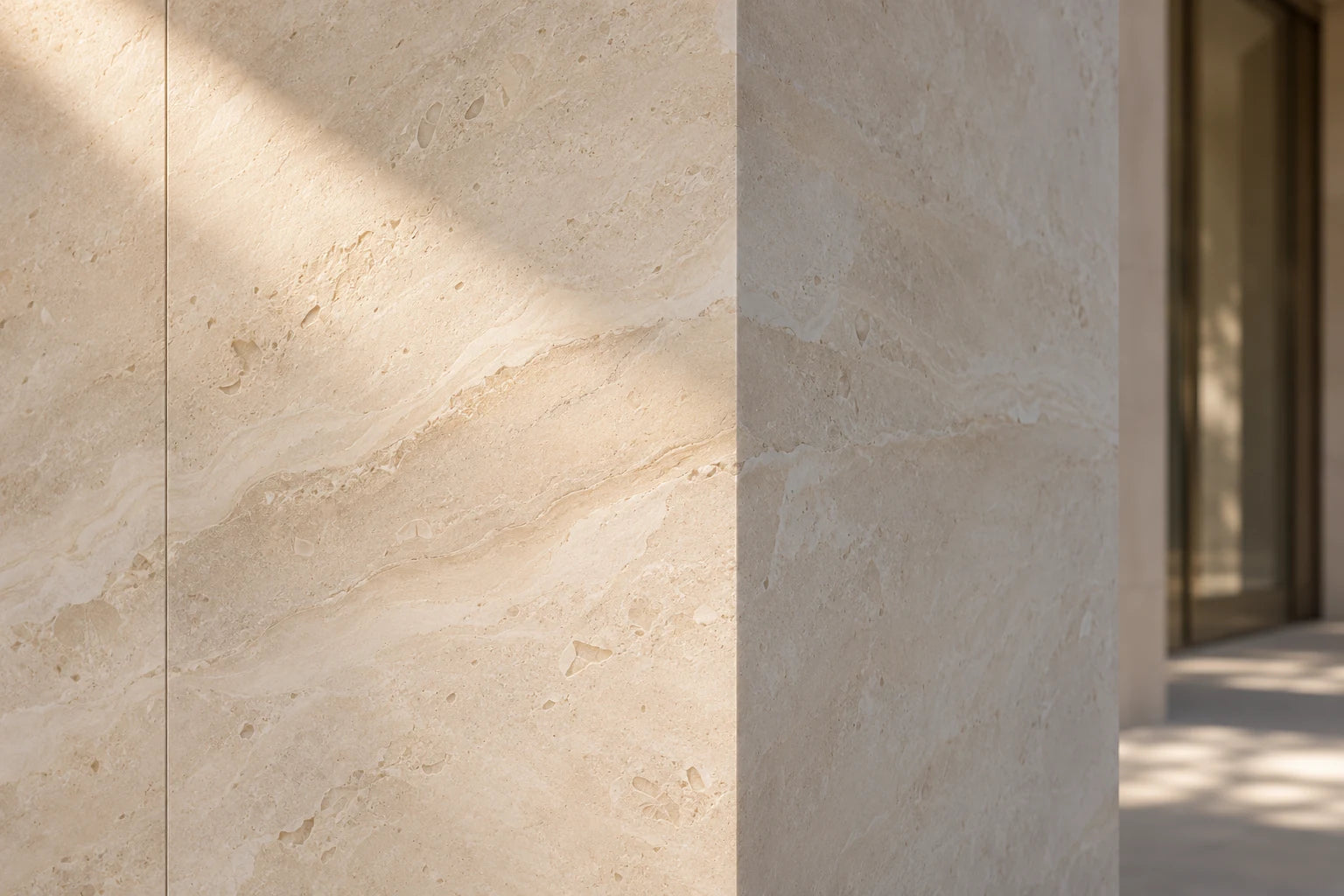
At the drawing board
Check where the darker seams meet stair nosings and outside corners. Compare the lightest and darkest buff areas beside the actual timber or paint.
Crema Marfil has a more even cream field and fewer visible patch boundaries. Compare Crema Marfil.
Palette and lot review
Compare the buff ground with walnut, terracotta and bronze, then check any cool grey paint beside the same samples.
Ask for full-face photographs showing the range from pale buff to darker patches. Mark the selected pairs and seam positions directly on the layout.
Confirm surround and stair-edge dimensions
Tan seams divide the beige patches in Botticino Classico marble. A seam crossing a narrow jamb can change the appearance of the whole door surround. These uses depend on small, exact pieces. Before asking for a quote, fix the door surround profile, the head and jamb widths, the reveal depth and the stair nosing shape. Give finished dimensions rather than nominal ones, and state the tolerances your installer needs.
Send drawings with sections
A plan view alone rarely shows how a surround meets the wall or how a tread edge returns into a riser. Include section drawings for each door type and stair, with counts for repeated pieces. If walls or floors in the same stone sit next to these trims, mark them too so trims and field pieces are reviewed together.
Choose your slabs
Ask for current slab photographs and a finish sample. Include the area, piece sizes and any joints that need to line up.
Request Botticino Classico slabs Ask for a finish sample Prepare your inquiry